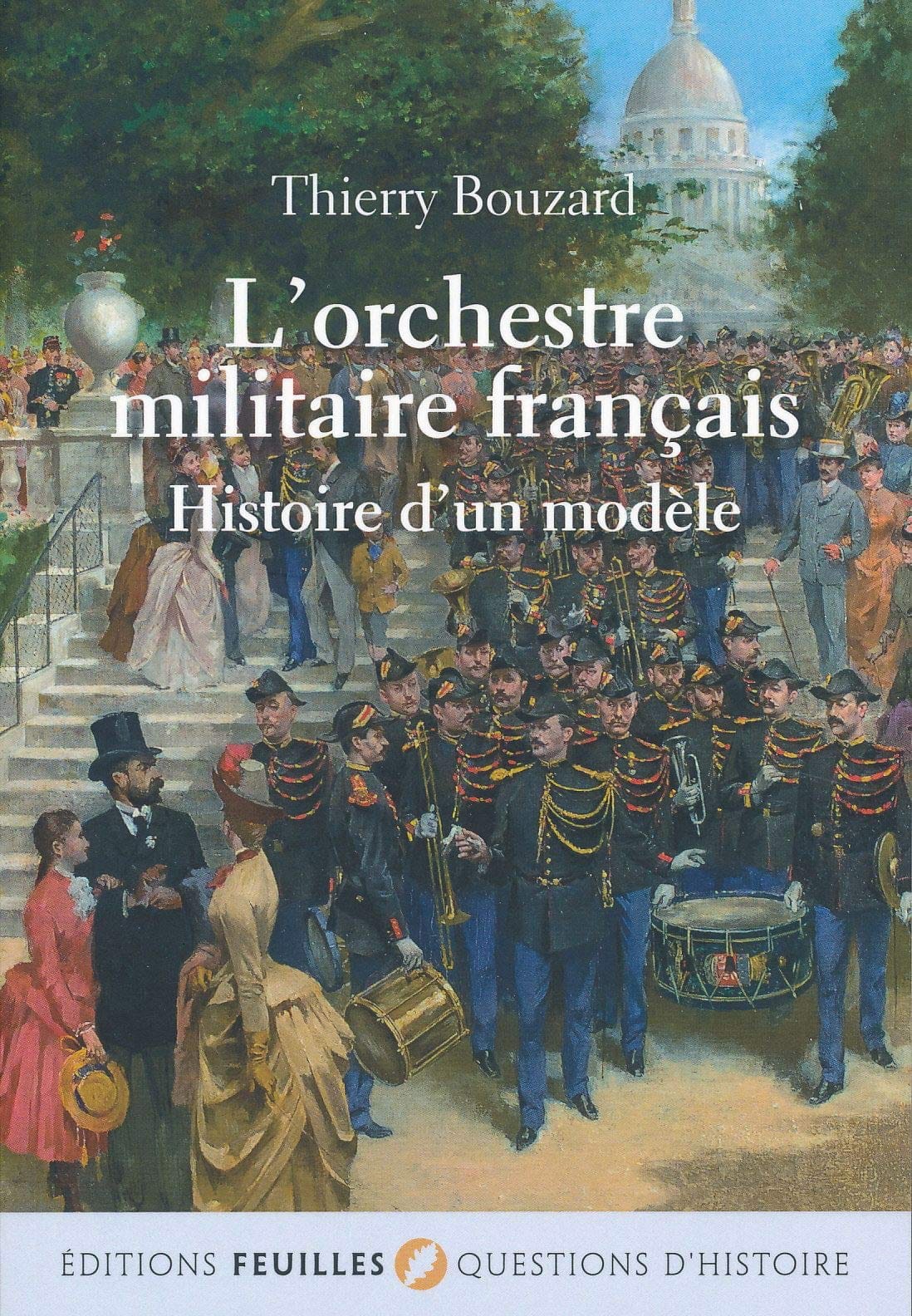
| The French military orchestra: story of a model
Thierry BOUZARD
Livre - BrochéFeuillesReference : 9791091890311
ISBN / ISMN:9791091890311
360 pages - 2019
|
|

What is the relationship between Francois I's fifes, the violins of Grand Condé and the saxophone? Between Lully and Philidor who make up marches for the regiments of Louis XIV and the tactical March of the knight of Lirou in 1767? Between the dawns in the Tuileries gardens and the Belle Epoque music kiosks? Between Guide Music and Republican Guard Music? Between Philidor and Berlioz? Lully and Indy? Saint-Saens and Melchior? In the land of music, the military band has made its way. Big names such as anonymous people helped to build his repertoires adapted to the open air, for very variable numbers, from the eight musicians of 1766 to the monster orchestras of the nineteenth century with their thousand performers. Of course, music has always been present in the armies, but what music? That of the drum that transmits the orders? From the Sunday concert in a garrison city? That of the parade or that of the Opera? Stride the pace, entertain the soldier at rest, federate the troops and gather the people, keep the memory, follow the fashion, so many facets, so many tasks that the military band assumes. It's a story.
 |
| | KÖPP Kai | | RAVET Hyacinthe | | BOZZA Eugène | | Pascal Lagrange | | DARDENNE Christophe | La pratique d'orchestre historique
| | The orchestra at work. Interpretations, negotiations, cooperation
| | Instrumental table
| | L'orchestre assassin
| | The orchestra, sound palette
| | IN STOCK29.00 € | | IN STOCK21.00 € | | IN STOCK31.10 € | | IN STOCK22.00 € | | IN STOCK27.68 € |
| |
| | DELEBARRE Gilles / LABORDE Denis | | ADENOT Pauline | | GUIRAUD Ernest / BUSSER Henri | | William Christie, Erik Orsenna, Bernard Cazeneuve et al. | | Daniel Kawka, Thierry Kawka, David Christofell | The project Demos: genesis, actors, issues
Transmission | | Symphonic orchestra musicians: from vocation to disenchantment
Musical universe | | Practical treatise of instrumentation
| | Review of both worlds - Baroque Passion (off-series heritage)
| | Ose ! : une poétique de l'orchestre
| | IN STOCK16.90 € | | IN STOCK36.50 € | | IN STOCK64.10 € | | IN STOCK18.00 € | | IN STOCK20.00 € |
| |
| |